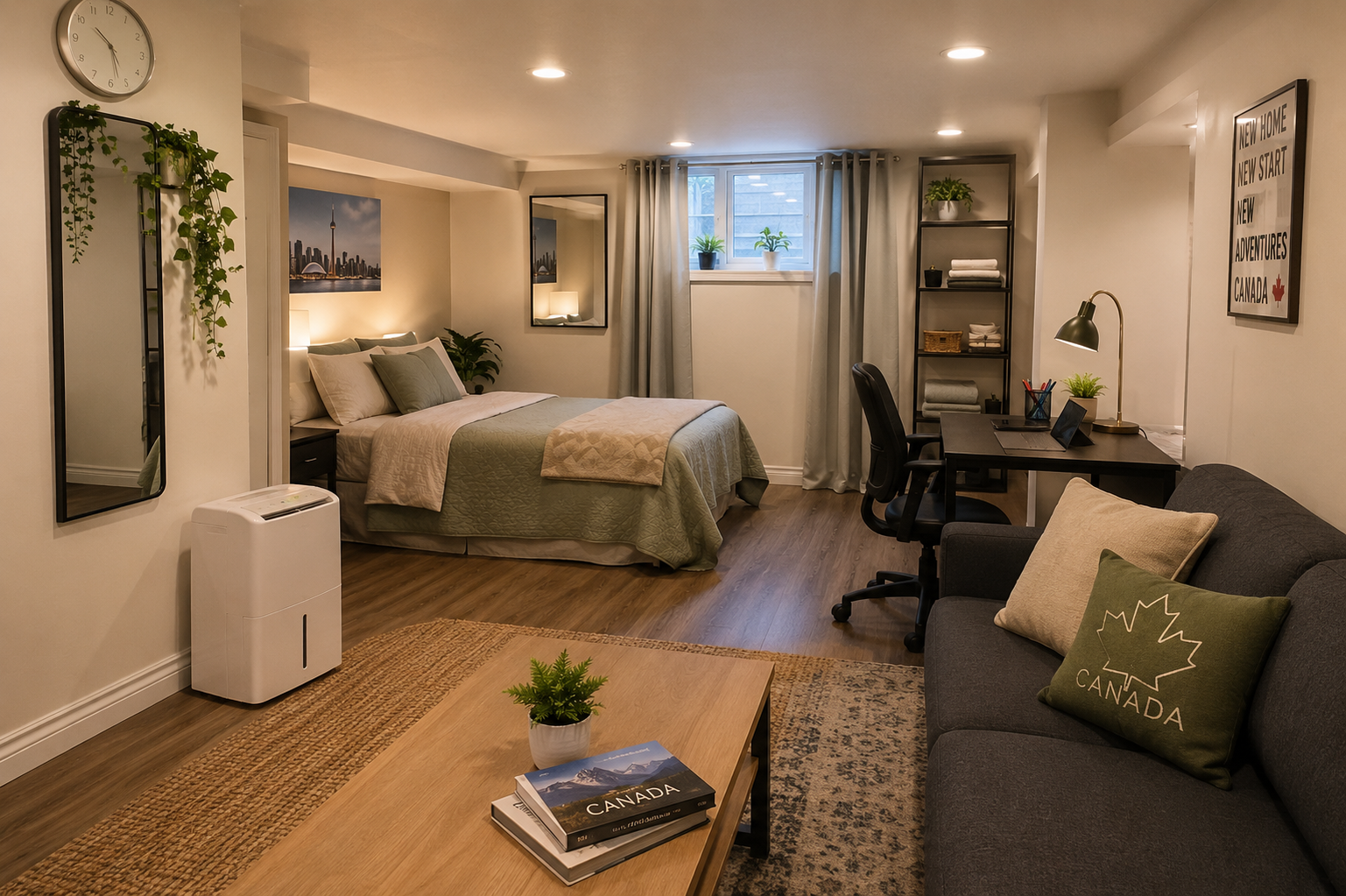

Introduction
Renting a basement (also known as a lower-level or basement apartment) is a popular housing option in Canada, especially for those seeking more affordable living arrangements. Many Canadian households, international students, and new immigrants choose basements as their home. However, before making a decision, it’s important to understand all aspects of this type of housing. This guide covers everything you need to make an informed choice.
Section 1: Understanding Basements in Canada
What Is a Basement?
A basement is a living space located below a house or building. In Canada, there are two common types of basements:
1. Fully Finished Basement:
This type of basement is completely finished and ready to live in. It typically includes bedrooms, a bathroom, a kitchen or kitchenette, and shared living spaces such as a living room. Fully finished basements generally meet Canadian building standards and can serve as an independent residential unit. They are more expensive but offer greater comfort.
2. Semi-Finished Basement:
A semi-finished basement is partially completed. Walls and ceilings may be finished, but living spaces may not be fully defined, and some utilities may be missing. These basements are cheaper than fully finished ones but offer less comfort.
Why Are Basements Popular in Canada?
Basements are popular for several reasons:
- They are generally more affordable than apartments or traditional homes.
- Fully finished basements offer all necessary amenities.
- Ideal for singles or young couples.
- Many Canadian homes have basements, providing plenty of rental options.
Section 2: Types of Rental Agreements and Terms
1. Standard Basement Rental Agreements
In Canada, basement leases are usually for a fixed term (commonly 12 months). These agreements outline the rights and responsibilities of both tenants and landlords.
12-Month Lease:
The most common lease type, often signed during summer (June–August) or fall (September–November). Both parties are committed for a year, and early termination usually incurs a penalty.
Fixed-Term Lease:
Short-term leases (3–6 months) are ideal for tenants who are unsure about their stay duration. They are often more expensive because landlords assume more risk.
Month-to-Month Lease:
This flexible option allows tenants and landlords to continue on a monthly basis. Either party can end the lease with proper notice (usually 30–60 days).
2. Key Terms in Canadian Lease Agreements
A Canadian basement lease should include:
- Rent and Payment Dates: Clearly state monthly rent and payment schedule. Some landlords offer discounts for prepayment.
- Security Deposit: Usually one month’s rent, held in a separate account and returned within 10–30 days after move-out if no damage occurs.
- Maintenance Responsibilities: Tenants handle interior upkeep, landlords handle building systems.
- Pet Policies: Specify whether pets are allowed and under what conditions.
- House Rules: Visitor policies, quiet hours, and other household regulations.
3. Rights and Responsibilities
Tenant Rights: Clean and safe housing, privacy, clear responsibilities, return of deposit, legal protection against wrongful eviction.
Tenant Responsibilities: Timely rent payment, property upkeep, following rules, seeking approval for major changes.
Landlord Rights: Timely rent collection, property access for repairs (with notice), deposit retention, eviction rights if lease terms are broken.
Landlord Responsibilities: Maintain safe living conditions, repair essential systems, respect tenant privacy, return deposit on time, no discrimination.
Section 3: Pros and Cons of Renting a Basement
Advantages
- Affordable Rent: Basements are typically 30–50% cheaper than comparable apartments.
- More Privacy and Quiet: Lower floors mean less street noise; separate entrances add privacy.
- Complete Amenities: Fully finished basements come with kitchen, bathroom, and utilities.
- Extra Space: Fully finished basements often provide ample living space.
- Flexible Leasing: Short-term leases suit temporary or mobile tenants.
Disadvantages
- Limited Natural Light: Basements may have small or no windows, affecting mood.
- Moisture Issues: Higher risk of dampness, mold, and mildew; proper ventilation needed.
- Ventilation Problems: Limited airflow can cause stuffiness.
- Noise from Above: Footsteps and activity from the upper floors can be audible.
- Restricted Access: Some basements have limited entrances, affecting mobility.
- Legal Limitations: Local regulations may restrict basement rentals based on size, safety, or egress requirements.
Section 4: Comparing Basements with Other Housing Options
Basement vs. Apartment:
- Rent: Basements 30–50% cheaper
- Light/Ventilation: Apartments better
- Privacy: Basements better
- Maintenance: Tenants handle basement upkeep; apartment maintenance often shared
Basement vs. House:
- Cost: Basements cheaper
- Space: Houses offer more room
- Independence: Houses offer full independence
- Maintenance: Houses require extensive upkeep; basements mostly interior only
Basement vs. Dorm/Shared Housing:
- Cost: Basements often cheaper than private dorms
- Privacy: Basements more private
- Services: Dorms may provide cleaning and amenities; basements usually do not
Section 5: Who Should Rent a Basement and Who Should Avoid It?
Ideal for:
- Budget-conscious individuals
- People seeking privacy
- Temporary or short-term residents
- Those spending little time at home
- Young couples without children
- People sensitive to street noise
Not Ideal for:
- Individuals with respiratory or allergy issues
- Those needing natural light
- Large families
- Seniors or mobility-limited individuals
- Owners of large pets
- People seeking full independence
- Home workers needing space and lighting
Section 6: Basement Rental Checklist
Before Visiting
- Research Location: Safety, public transit, proximity to stores/cafes.
- Compare Prices: Extremely low rent may indicate issues.
- Check Landlord Reputation: Gather information if possible.
During the Visit
- Light and Ventilation: Check windows and airflow.
- Moisture and Condition: Smell for dampness, check walls and floors.
- Heating/Cooling Systems: Ensure HVAC or heaters work.
- Bathroom and Kitchen: Verify cleanliness, hot water, appliances.
- Safety and Emergency Exits: Look for fire escapes and exits.
- Noise Levels: Check at different times of the day.
- Storage Space: Evaluate closet and storage availability.
- Sump and Drainage: Check for water issues.
Lease Review
- Read all terms carefully, verify rent, deposit, responsibilities, and pet policies.
- Ensure legality according to local rental laws.
After Signing
- Take detailed photos of the property.
- Complete a move-in inspection form with the landlord.
- Keep receipts for all payments.
Section 7: Basement Rental Costs in Canadian Cities (2024–2025)
Toronto
- Fully finished: $1,400–$2,200/month
- Semi-finished: $1,100–$1,900/month
- Suburbs (Mississauga, Brampton): $1,000–$1,600/month
Vancouver
- Fully finished: $1,600–$2,400/month
- Suburbs (Burnaby, Surrey): $1,200–$1,800/month
Calgary
- Fully finished: $1,000–$1,600/month
- Semi-finished: $800–$1,200/month
Montreal
- Fully finished: $900–$1,500/month
- Suburbs (Laval, Longueuil): $800–$1,300/month
Ottawa
- Fully finished: $1,000–$1,500/month
Edmonton
- Fully finished: $800–$1,300/month
Winnipeg
- Fully finished: $700–$1,200/month
Quebec City
- Fully finished: $600–$1,000/month
This translation is SEO-friendly with natural headings, key phrases like basement rental in Canada, affordable housing, basement apartment, and city-specific keywords, which can improve Google search ranking.
Key Points
What Is a Basement?
A living space located below ground. Two types: fully finished and semi-finished. More affordable and private than apartments.
Types of Rental Agreements
12-month lease (most common), fixed-term (3–6 months), and month-to-month (flexible). All include rent, deposit, and responsibilities.
Pros and Cons
Pros: Low rent, more privacy. Cons: Limited natural light, moisture, poor ventilation.
Quick Comparison
Compared to apartments: cheaper. Compared to houses: less space. Compared to dorms: more privacy.
Who Is It For?
Best for: students, budget-conscious renters. Not ideal for: large families, seniors.
Before Renting
Check lighting and ventilation. Look for moisture and mold. Inspect safety features. Read the lease carefully.
City Rental Costs
Toronto: $1,400–$2,200 | Montreal: $900–$1,500 | Edmonton: $800–$1,300 | Winnipeg: $700–$1,200
Students and Immigrants
Students: short-term leases. Immigrants: may need SIN number and reference letter.
⚡ Important Tips
- ✅ Visit at least 2–3 times before renting
- ✅ Read the lease agreement carefully
- ✅ Always get receipts for payments
- ✅ Take photos of the basement condition
Basement Rental Guide 2024-2025
Approximate Basement Prices
| City | Fully Finished | Semi-Finished | Notes |
|---|---|---|---|
| Toronto | $1,400-$2,200 | $1,200-$1,900 | Most expensive |
| Vancouver | $1,600-$2,400 | $1,300-$2,000 | Very expensive |
| Calgary | $1,000-$1,600 | $800-$1,200 | Relatively cheap |
| Montreal | $900-$1,500 | $700-$1,200 | Affordable |
| Ottawa | $1,000-$1,500 | $800-$1,200 | Average |
| Edmonton | $800-$1,300 | $600-$1,000 | Very cheap |
| Winnipeg | $700-$1,200 | $500-$900 | Very affordable |
| Quebec City | $600-$1,000 | $500-$800 | Cheapest |
Factors Affecting Prices
- Location: Basements near public transit are usually more expensive.
- House Age: Older homes often have cheaper basements.
- Condition: Newly renovated or better-ventilated basements tend to cost more.
- Neighborhood: Popular areas usually have higher prices.
- Size: Larger basements are generally more expensive.
Tips for Students and Immigrants
International Students
- Short-term leases: Many landlords offer 8-10 month leases aligned with academic years.
- Financial guarantors: Some landlords require a Canadian co-signer.
- Rental insurance: May be required to cover unpaid rent.
- Shared basements: Common to share with others to reduce cost; check lease allows this.
New Immigrants
- SIN & Credit History: Landlords often request Canadian tax number or credit report.
- References: Reference or introduction letters showing reliability.
- Utility Costs: Shared basements may have high heating costs in winter.
Practical Tips for Living in a Basement
Humidity Management
- Use a dehumidifier to remove excess moisture.
- Ventilate daily by opening windows briefly.
- Dry clothes using a dryer or outdoor line.
Improving Light
- Use bright LED lamps with white light.
- Hang large mirrors to reflect light.
- Use light-colored curtains to allow more sunlight.
Ventilation
- Use portable fans if HVAC is insufficient.
- Window ventilators can bring in fresh air.
- Avoid cooking with lots of smoke or oil.
Creating a Spacious Feel
- Paint walls in light colors if allowed.
- Use minimal furniture to make space feel larger.
- Mirrors and large pictures enhance perceived space.
Conclusion
Renting a basement in Canada is a great option for those seeking affordable and private housing. Benefits include lower rent and more privacy, while drawbacks may include limited light, humidity issues, and poor ventilation.
Before deciding:
- Research cities, prices, and neighborhoods.
- Visit multiple basements to inspect thoroughly.
- Read leases carefully and understand all terms.
- Ask plenty of questions to the landlord.
- Take photos of the basement condition.
- Bring a friend or family member to help with decisions.
Following these tips helps you find a suitable basement and ensures a smooth start in Canada.
Useful References
- Rental Housing Ombudsman (RHO) Canada
- Provincial rental regulations
- Trusted rental websites: Kijiji, Craigslist, PadMapper
- Tenant rights organizations in each city